


WINEMAKER NOTES
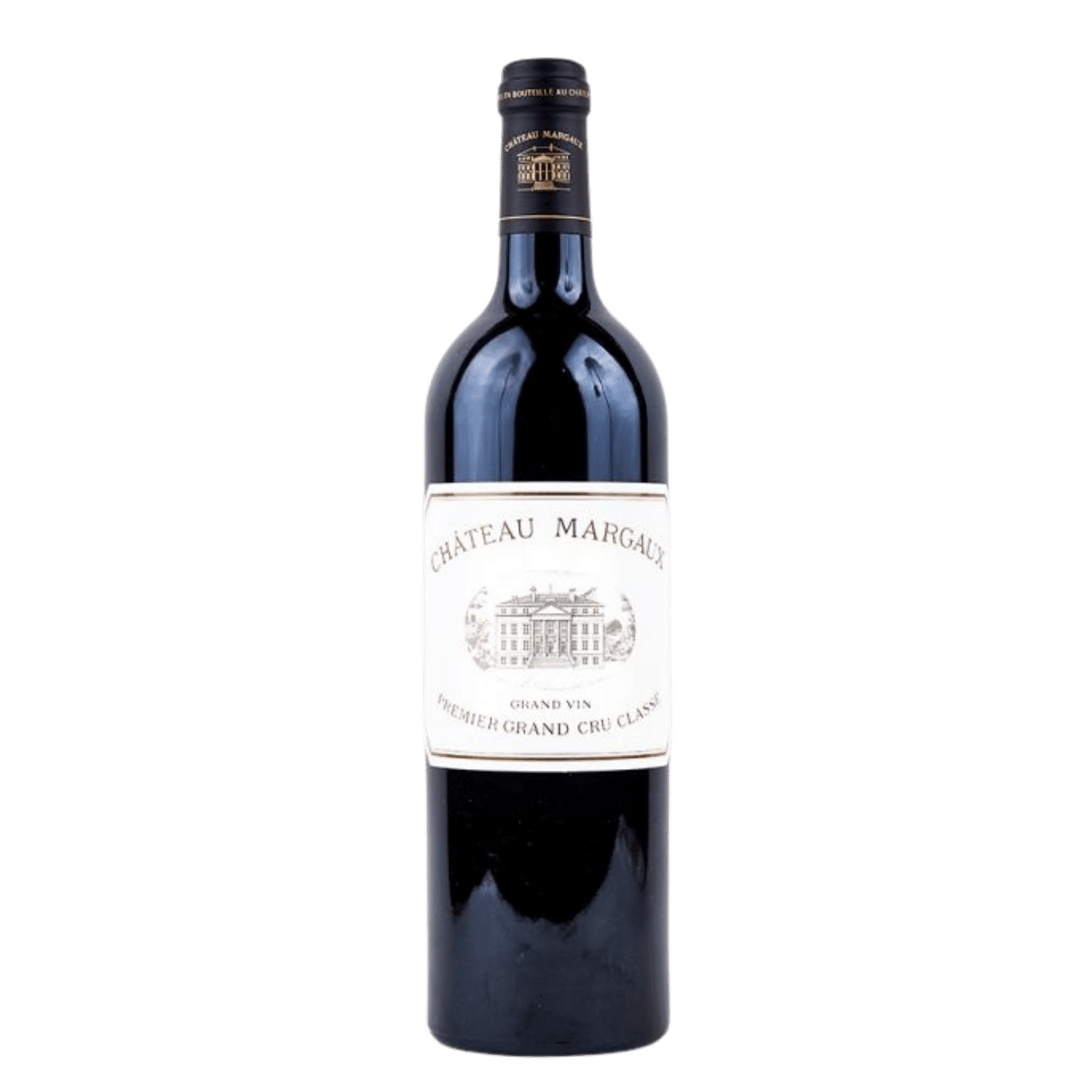
2008 Chateau Margaux, Margaux, France
No vintage between 2004 and 2008 with the notable exception of course of 2005, had glorious weather during the month of August; still, every year, the grapes have ripened (particularly those in the great terroirs), thanks to fine weather in September.
But other positive factors might not be obvious: in 2008 the July drought and the nice weather from mid-September onwards probably limited the consequences of the regular and light August showers. There are no miracles, just ignorance... As always it is our drastic selection which brings out the true spirit of a vintage.
2008 is no exception to the rule. The first wine only represents 36% of the crop (31% at bottling, once the wine has lost its lees due to the rackings during the aging in barrel). Each grape variety plays its harmonious part in the blend: our best Merlot (10%) brings more power, fatness and flesh than it did in 2006 or 2007; the Cabernet Sauvignon (87%) is as usual the heart and the soul of the wine.
Not forgetting the Cabernet Franc (1.5%) and the Petit Verdot (1.5%) whose modest presence does not truly reflect their influence in the blend. The 2008 is a very fine Château Margaux, it displays a nose of great finesse and purity, and it is as deep and charming as the 2004.
What really amazes us is its power on the palate: we never expected such density, length and richness. The tannins are superb! They give the Château Margaux 2008 a very tight-grained texture, wonderful length, and a more classic personality than previously thought. Ideally, wait a few more years before starting to drink it. (October 2018).
Climate
After quite a dry winter, spring was cool and damp; in fact it was so chilly at the beginning of April that we used our anti-frost sprays on April 7th at Virefougasse, our Sauvignon Blanc plot. May was particularly wet, which increased the risk of downy mildew at a time when the vines were most vulnerable, so that for the second year in a row, we had to carefully monitor the health of the vines.
Nevertheless we continued our research on alternative solutions to chemical sprays; the conditions provided us with an ideal opportunity to do so. The flowering began at the very beginning of June, right on the normal date, although it was partly affected by heavy rains, which were no doubt responsible for the coulure and millerandage observed in some of the Merlot plots.
Also, the vines showed fewer potential grapes than last year, so we knew that we were in for a smaller crop. The weather was cool throughout the summer, with temperatures around two degrees below average in July, August and September.
July, however, was very dry with barely 10 mm (0.4 of an inch) of rain, whereas in August and up until September 15th, it rained regularly. This chilly and humid weather slowed the color transformation of the grapes and their ripening process while it gradually affected our spirits…
Shipping Information
Domestic Shipping
We currently ship wine to eligible U.S. states where the shipment of alcohol is legally permitted. Orders are fulfilled via UPS or FedEx, so please plan according to the carrier's delivery schedule.
Orders placed Monday through Thursday before 2:00 p.m. Pacific Time typically ship the same day. Orders placed after 2:00 p.m. on Thursday through Sunday will ship the following Monday.
Same-day delivery may be available within the Los Angeles Metro area if placed before noon. Please contact us at (626) 714-7006 to arrange expedited local service.
Packaging & Temperature-Sensitive Shipping
To protect wine quality, all orders are packed in EPS foam shippers, with gel packs when necessary.
Wine is temperature-sensitive and may be affected by excessive heat, freezing temperatures, or significant temperature fluctuations during transit. During periods of elevated temperature risk, we strongly recommend selecting Next Day Air service whenever available.
Customers requesting shipment during warm or cold weather conditions must review and agree to our Temperature Protection & Shipping Policy. By requesting shipment, customers acknowledge and accept the risks associated with temperature exposure, carrier delays, failed delivery attempts, and other transit-related conditions outside of Angry Wine Merchant's control.
For OWC (Original Wooden Case) orders, bottles are removed and shipped in foam for safety. The wooden case ships separately via Ground unless otherwise requested.
Weather Holds & Free Storage
In periods of extreme heat or cold, we reserve the right to delay shipment until safer conditions return. Customers may also request that we hold an order for future shipment.
We offer complimentary temperature-controlled storage for up to 6 months from the date of purchase. Select the "Hold for Weather" option at checkout and we will coordinate shipping at a later date.
Insurance
We provide free shipping insurance for loss or visible damage during transit, subject to carrier terms and conditions.
Shipping insurance does not cover deterioration in wine condition resulting from heat exposure, freezing temperatures, temperature fluctuations, carrier delays, missed delivery attempts, carrier holds, or other temperature-related transit conditions. Please review our Temperature Protection & Shipping Policy for more information.
Adult Signature Required
All shipments of alcohol require an adult signature (21+) upon delivery. Carriers will not release packages without adult authorization.
Customers are responsible for ensuring that an eligible adult is available to receive the shipment on the first delivery attempt. Additional charges may apply for re-delivery, redirection, failed delivery attempts, returned shipments, or reshipment.
Shipping Address Accuracy
Orders are shipped to the exact shipping address provided at checkout. Angry Wine Merchant is not responsible for errors or omissions in the address submitted by the customer.
If a package is delayed, returned, misdelivered, or requires rerouting due to incorrect or incomplete shipping details, the customer assumes full responsibility. Additional shipping fees may apply if reshipment is required. By placing an order, you confirm that the shipping address entered is correct and agree to these terms.
International Shipping
We do offer international shipping where legally allowed. For details, click here or contact us directly.
States We Ship To
We ship to the following U.S. states:
Alabama (AL), Alaska (AK), Arizona (AZ), Arkansas (AR), California (CA), Colorado (CO), Connecticut (CT), Delaware (DE), Florida (FL), Georgia (GA), Hawaii (HI), Idaho (ID), Illinois (IL), Indiana (IN), Iowa (IA), Kansas (KS), Kentucky (KY), Louisiana (LA), Maine (ME), Maryland (MD), Massachusetts (MA), Michigan (MI), Minnesota (MN), Mississippi (MS), Missouri (MO), Montana (MT), Nebraska (NE), Nevada (NV), New Hampshire (NH), New Jersey (NJ), New Mexico (NM), New York (NY), North Carolina (NC), Ohio (OH), Oklahoma (OK), Oregon (OR), Pennsylvania (PA), Rhode Island (RI), South Carolina (SC), South Dakota (SD), Tennessee (TN), Texas (TX), Vermont (VT), Virginia (VA), Washington (WA), West Virginia (WV), Wisconsin (WI), Wyoming (WY)
Shipping laws and carrier availability may change. If your state does not appear as an available shipping destination during checkout, we are unable to ship there at this time. Please contact us if you would like to confirm current eligibility.
2008 Chateau Margaux, Margaux, France
No vintage between 2004 and 2008 with the notable exception of course of 2005, had glorious weather during the month of August; still, every year, the grapes have ripened (particularly those in the great terroirs), thanks to fine weather in September.
But other positive factors might not be obvious: in 2008 the July drought and the nice weather from mid-September onwards probably limited the consequences of the regular and light August showers. There are no miracles, just ignorance... As always it is our drastic selection which brings out the true spirit of a vintage.
2008 is no exception to the rule. The first wine only represents 36% of the crop (31% at bottling, once the wine has lost its lees due to the rackings during the aging in barrel). Each grape variety plays its harmonious part in the blend: our best Merlot (10%) brings more power, fatness and flesh than it did in 2006 or 2007; the Cabernet Sauvignon (87%) is as usual the heart and the soul of the wine.
Not forgetting the Cabernet Franc (1.5%) and the Petit Verdot (1.5%) whose modest presence does not truly reflect their influence in the blend. The 2008 is a very fine Château Margaux, it displays a nose of great finesse and purity, and it is as deep and charming as the 2004.
What really amazes us is its power on the palate: we never expected such density, length and richness. The tannins are superb! They give the Château Margaux 2008 a very tight-grained texture, wonderful length, and a more classic personality than previously thought. Ideally, wait a few more years before starting to drink it. (October 2018).
Climate
After quite a dry winter, spring was cool and damp; in fact it was so chilly at the beginning of April that we used our anti-frost sprays on April 7th at Virefougasse, our Sauvignon Blanc plot. May was particularly wet, which increased the risk of downy mildew at a time when the vines were most vulnerable, so that for the second year in a row, we had to carefully monitor the health of the vines.
Nevertheless we continued our research on alternative solutions to chemical sprays; the conditions provided us with an ideal opportunity to do so. The flowering began at the very beginning of June, right on the normal date, although it was partly affected by heavy rains, which were no doubt responsible for the coulure and millerandage observed in some of the Merlot plots.
Also, the vines showed fewer potential grapes than last year, so we knew that we were in for a smaller crop. The weather was cool throughout the summer, with temperatures around two degrees below average in July, August and September.
July, however, was very dry with barely 10 mm (0.4 of an inch) of rain, whereas in August and up until September 15th, it rained regularly. This chilly and humid weather slowed the color transformation of the grapes and their ripening process while it gradually affected our spirits…
2008 Chateau Margaux, Margaux, France
No vintage between 2004 and 2008 with the notable exception of course of 2005, had glorious weather during the month of August; still, every year, the grapes have ripened (particularly those in the great terroirs), thanks to fine weather in September.
But other positive factors might not be obvious: in 2008 the July drought and the nice weather from mid-September onwards probably limited the consequences of the regular and light August showers. There are no miracles, just ignorance... As always it is our drastic selection which brings out the true spirit of a vintage.
2008 is no exception to the rule. The first wine only represents 36% of the crop (31% at bottling, once the wine has lost its lees due to the rackings during the aging in barrel). Each grape variety plays its harmonious part in the blend: our best Merlot (10%) brings more power, fatness and flesh than it did in 2006 or 2007; the Cabernet Sauvignon (87%) is as usual the heart and the soul of the wine.
Not forgetting the Cabernet Franc (1.5%) and the Petit Verdot (1.5%) whose modest presence does not truly reflect their influence in the blend. The 2008 is a very fine Château Margaux, it displays a nose of great finesse and purity, and it is as deep and charming as the 2004.
What really amazes us is its power on the palate: we never expected such density, length and richness. The tannins are superb! They give the Château Margaux 2008 a very tight-grained texture, wonderful length, and a more classic personality than previously thought. Ideally, wait a few more years before starting to drink it. (October 2018).
Climate
After quite a dry winter, spring was cool and damp; in fact it was so chilly at the beginning of April that we used our anti-frost sprays on April 7th at Virefougasse, our Sauvignon Blanc plot. May was particularly wet, which increased the risk of downy mildew at a time when the vines were most vulnerable, so that for the second year in a row, we had to carefully monitor the health of the vines.
Nevertheless we continued our research on alternative solutions to chemical sprays; the conditions provided us with an ideal opportunity to do so. The flowering began at the very beginning of June, right on the normal date, although it was partly affected by heavy rains, which were no doubt responsible for the coulure and millerandage observed in some of the Merlot plots.
Also, the vines showed fewer potential grapes than last year, so we knew that we were in for a smaller crop. The weather was cool throughout the summer, with temperatures around two degrees below average in July, August and September.
July, however, was very dry with barely 10 mm (0.4 of an inch) of rain, whereas in August and up until September 15th, it rained regularly. This chilly and humid weather slowed the color transformation of the grapes and their ripening process while it gradually affected our spirits…
Choose options