

WINEMAKER NOTES
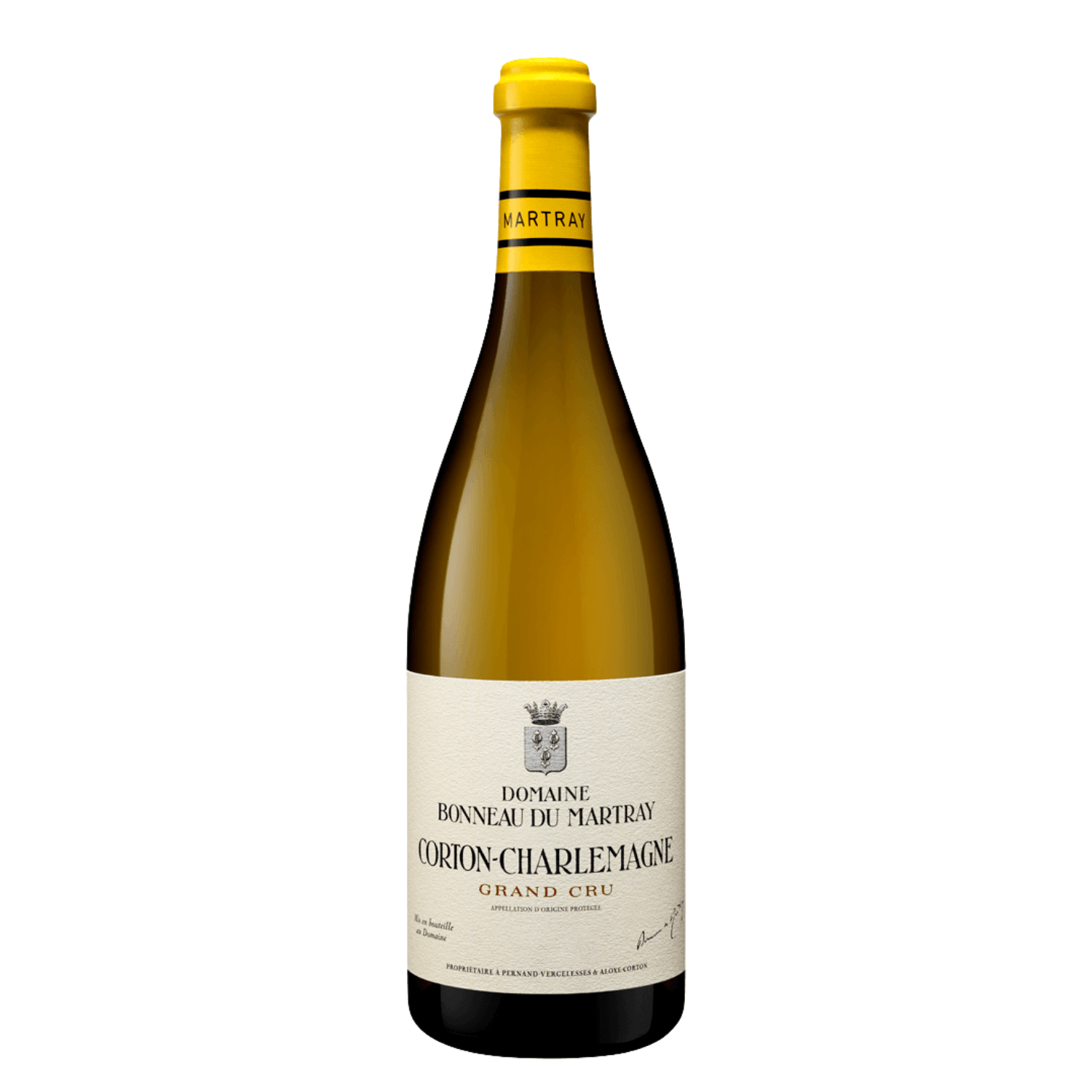
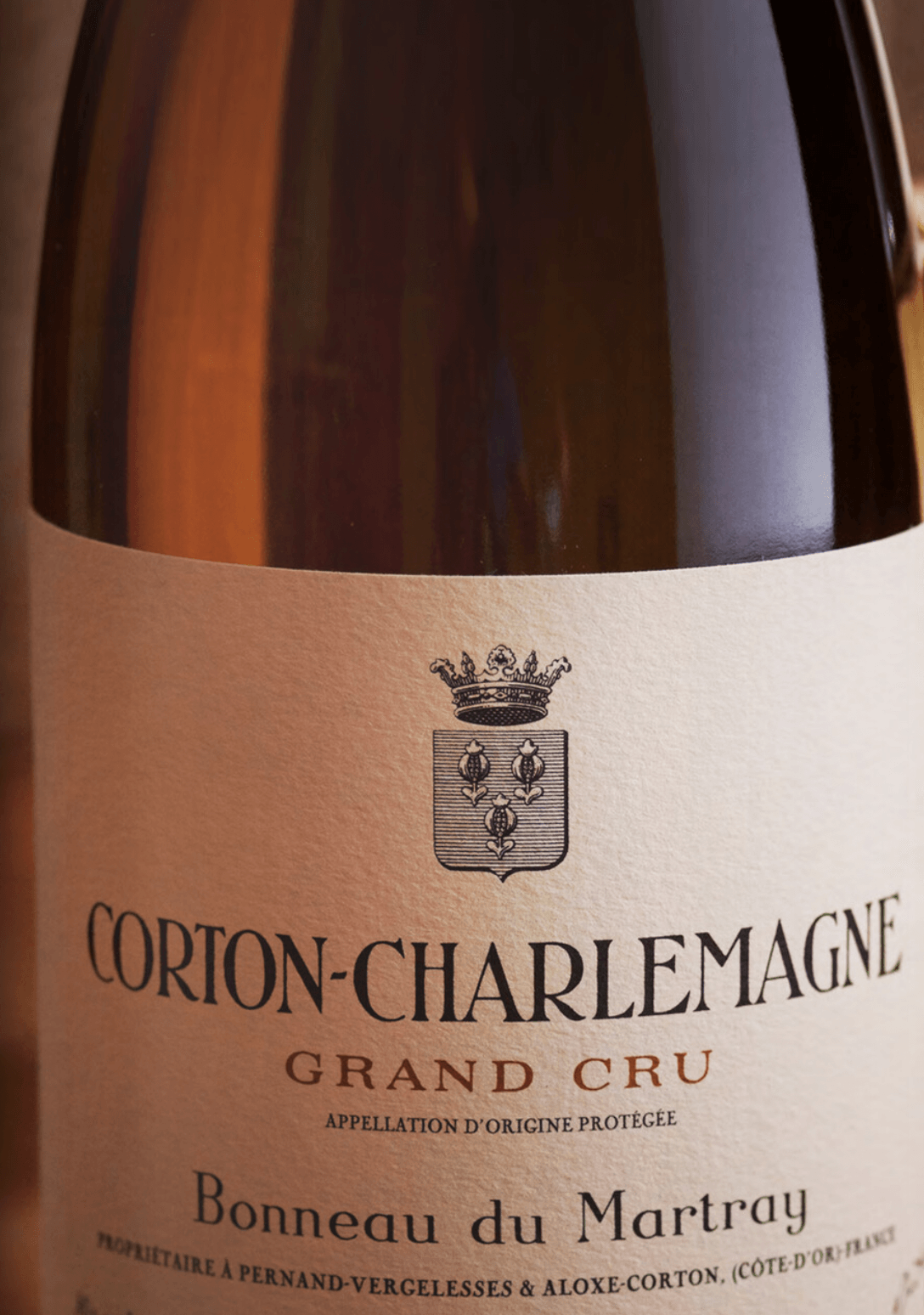
2011 Domaine Bonneau du Martray Corton-Charlemagne Grand Cru, Cote de Beaune, France
The Charlemagne climate, the historical heart of the Corton-Charlemagne Grand Cru appellation harmoniously rounds off the hill of Corton on its western side. The vines facing west are exposed to the sun from mid-morning until sunset, a unique feature in Burgundy. The air circulation caused by the neighbouring hills ventilates the vineyard and preserves the freshness of the grapes.
Bonneau du Martray's vineyard run from top to bottom of the hill, where the thickness of the clays, silts, marls and different types of limestone make up a mosaic of soil with very different requirements and results: the parcels at the foot of the forest on the top of the hill give the wine a crystalline appearance, with floral and citrus fruit notes.
The vines in the heart of the hill structure the wine and bring grain to it, while the parcels at the bottom of the hill, richer in minerals, bring the power of Charlemagne.
The composition of this unique Bonneau du Martray cuvée reflects the complexity and richness of this great terroir, the most authentic representation of Charlemagne's terroir.
When the fruit is received at the winery, a light crushing of the berries takes place before pressing. This allows a gentle extraction of the aromatic quintessence of the vintage.
After settling, fermentation takes place in a combination of new and aged French oak barrels. Each barrel is followed with great care until its first racking. At this stage the blending starts. The resulting lots continue their ageing on their fine lees through a second winter.
At the end of this period, the wine is racked a second time to separate its remaining lees. It is then moved to tanks for two additional months to assure homogenization. The wine is finally bottled during a waning phase of the moon.
When the fruit is received at the winery, a light crushing of the berries takes place before pressing. This allows a gentle extraction of the aromatic quintessence of the vintage.
After settling, fermentation takes place in a combination of new and aged French oak barrels. Each barrel is followed with great care until its first racking. At this stage the blending starts. The resulting lots continue their ageing on their fine lees through a second winter.
At the end of this period, the wine is racked a second time to separate its remaining lees. It is then moved to tanks for two additional months to assure homogenization. The wine is finally bottled during a waning phase of the moon.
Shipping Information
Domestic Shipping
We ship wine to eligible U.S. states via UPS or FedEx. Orders placed Monday through Thursday before 2:00 p.m. Pacific Time typically ship the same day. Orders placed after the shipping cutoff will be scheduled for the next available shipping day.
Los Angeles Delivery
Same-day delivery may be available within the Los Angeles area Monday through Friday for orders placed before 2:00 p.m. Pacific Time. Please contact us to confirm availability and delivery arrangements.
Packaging & Temperature
Wine is packed in protective EPS foam shipping containers, with gel packs used when appropriate. Original Wooden Cases (OWC) are shipped separately to help protect both the wine and the wooden case during transit.
Because wine is temperature-sensitive, we may recommend expedited shipping or holding an order when weather conditions present an elevated risk. Please review our Temperature Protection & Shipping Policy for additional information.
Weather Holds & Storage
During periods of extreme heat or cold, shipments may be delayed until conditions improve. Customers may also request that an order be held for a later shipping date.
Complimentary temperature-controlled storage is available for up to 6 months from the date of purchase. Select the available weather-hold option at checkout or contact us to coordinate a future shipment.
Shipping Protection
Shipping protection for loss or visible damage in transit is included with eligible shipments, subject to applicable terms and carrier requirements. Temperature-related deterioration is not covered.
Please review our Temperature Protection & Shipping Policy for additional details.
Adult Signature Required
All wine deliveries require an adult signature from a recipient age 21 or older. Please ensure an eligible adult is available to receive the shipment.
Additional carrier charges may apply for failed delivery attempts, address changes, redirection, returned shipments, or reshipment.
Shipping Address
Please verify your shipping address carefully before completing checkout. Additional charges resulting from an incorrect or incomplete address, rerouting, returned shipment, or reshipment are the responsibility of the customer.
International Shipping
International shipping may be available to select destinations and requires review before purchase. Please see our International Shipping Information for eligibility and inquiry details.
Where We Ship
We currently ship wine to the following U.S. states:
Alabama, Alaska, Arizona, Arkansas, California, Colorado, Connecticut, Delaware, Florida, Georgia, Hawaii, Idaho, Illinois, Indiana, Iowa, Kansas, Kentucky, Louisiana, Maine, Maryland, Massachusetts, Michigan, Minnesota, Mississippi, Missouri, Montana, Nebraska, Nevada, New Hampshire, New Jersey, New Mexico, New York, North Carolina, Ohio, Oklahoma, Oregon, Pennsylvania, Rhode Island, South Carolina, South Dakota, Tennessee, Texas, Vermont, Virginia, Washington, West Virginia, Wisconsin, and Wyoming.
Shipping laws and carrier availability may change. If your state is not available as a shipping destination at checkout, please contact us to confirm current eligibility.
2011 Domaine Bonneau du Martray Corton-Charlemagne Grand Cru, Cote de Beaune, France
The Charlemagne climate, the historical heart of the Corton-Charlemagne Grand Cru appellation harmoniously rounds off the hill of Corton on its western side. The vines facing west are exposed to the sun from mid-morning until sunset, a unique feature in Burgundy. The air circulation caused by the neighbouring hills ventilates the vineyard and preserves the freshness of the grapes.
Bonneau du Martray's vineyard run from top to bottom of the hill, where the thickness of the clays, silts, marls and different types of limestone make up a mosaic of soil with very different requirements and results: the parcels at the foot of the forest on the top of the hill give the wine a crystalline appearance, with floral and citrus fruit notes.
The vines in the heart of the hill structure the wine and bring grain to it, while the parcels at the bottom of the hill, richer in minerals, bring the power of Charlemagne.
The composition of this unique Bonneau du Martray cuvée reflects the complexity and richness of this great terroir, the most authentic representation of Charlemagne's terroir.
When the fruit is received at the winery, a light crushing of the berries takes place before pressing. This allows a gentle extraction of the aromatic quintessence of the vintage.
After settling, fermentation takes place in a combination of new and aged French oak barrels. Each barrel is followed with great care until its first racking. At this stage the blending starts. The resulting lots continue their ageing on their fine lees through a second winter.
At the end of this period, the wine is racked a second time to separate its remaining lees. It is then moved to tanks for two additional months to assure homogenization. The wine is finally bottled during a waning phase of the moon.
When the fruit is received at the winery, a light crushing of the berries takes place before pressing. This allows a gentle extraction of the aromatic quintessence of the vintage.
After settling, fermentation takes place in a combination of new and aged French oak barrels. Each barrel is followed with great care until its first racking. At this stage the blending starts. The resulting lots continue their ageing on their fine lees through a second winter.
At the end of this period, the wine is racked a second time to separate its remaining lees. It is then moved to tanks for two additional months to assure homogenization. The wine is finally bottled during a waning phase of the moon.
2011 Domaine Bonneau du Martray Corton-Charlemagne Grand Cru, Cote de Beaune, France
The Charlemagne climate, the historical heart of the Corton-Charlemagne Grand Cru appellation harmoniously rounds off the hill of Corton on its western side. The vines facing west are exposed to the sun from mid-morning until sunset, a unique feature in Burgundy. The air circulation caused by the neighbouring hills ventilates the vineyard and preserves the freshness of the grapes.
Bonneau du Martray's vineyard run from top to bottom of the hill, where the thickness of the clays, silts, marls and different types of limestone make up a mosaic of soil with very different requirements and results: the parcels at the foot of the forest on the top of the hill give the wine a crystalline appearance, with floral and citrus fruit notes.
The vines in the heart of the hill structure the wine and bring grain to it, while the parcels at the bottom of the hill, richer in minerals, bring the power of Charlemagne.
The composition of this unique Bonneau du Martray cuvée reflects the complexity and richness of this great terroir, the most authentic representation of Charlemagne's terroir.
When the fruit is received at the winery, a light crushing of the berries takes place before pressing. This allows a gentle extraction of the aromatic quintessence of the vintage.
After settling, fermentation takes place in a combination of new and aged French oak barrels. Each barrel is followed with great care until its first racking. At this stage the blending starts. The resulting lots continue their ageing on their fine lees through a second winter.
At the end of this period, the wine is racked a second time to separate its remaining lees. It is then moved to tanks for two additional months to assure homogenization. The wine is finally bottled during a waning phase of the moon.
When the fruit is received at the winery, a light crushing of the berries takes place before pressing. This allows a gentle extraction of the aromatic quintessence of the vintage.
After settling, fermentation takes place in a combination of new and aged French oak barrels. Each barrel is followed with great care until its first racking. At this stage the blending starts. The resulting lots continue their ageing on their fine lees through a second winter.
At the end of this period, the wine is racked a second time to separate its remaining lees. It is then moved to tanks for two additional months to assure homogenization. The wine is finally bottled during a waning phase of the moon.
Choose options